

The Problem: The Company That Automates Enterprise Sales Was Invisible to Its Own Buyers
Inventive.ai built a product that enterprise sales teams genuinely need: an AI platform for RFPs, RFIs, and security questionnaires that turns weeks‑long response cycles into hours. It pulls from internal knowledge bases, past proposals, and CRM data to generate accurate, context‑aware drafts, helping presales teams move faster and win more deals.
But the company was invisible to its own buyers. Procurement leaders, sales directors, and presales managers were actively searching for RFP automation solutions—and they were finding other vendors first. Inventive relied almost entirely on referrals and personal introductions, with zero meaningful inbound pipeline. The website existed but didn’t answer buyer questions or act as a discovery channel.
The Solution: A Website Rebuilt Around Buyer Intent
Knowledge Architecture
The transformation started with building a structured understanding of:
- How Inventive fits into the enterprise sales automation market.
- Target buyers: procurement, sales, and presales teams.
- Buyer language around RFP processes, security questionnaires, and presales workflows.
- Core product capabilities and competitive context.
That foundation ensured every piece of content matched how real buyers think and search, not just how the team wanted to position the product. This is the same kind of buyer‑intent structuring you see in strong answer‑engine strategies.
Buyer Journey Mapping
We mapped the RFP and presales research journey across stages:
- Early‑stage: definitional and framework queries (“what is an RFP,” “how do security questionnaires work”).
- Mid‑stage: solution‑comparison and evaluation questions (“RFP automation tools,” “best RFP response platforms”).
- Late‑stage: operational guidance (“how to integrate RFP tools with CRM,” “RFP ROI metrics”).
Each stage got dedicated content that spoke to the buyer’s current mindset.
Content Build‑Out
We built 350 pages tightly aligned with real buyer questions, not generic “hero‑copy” pages. The goal wasn’t just volume, but topical authority across the full RFP and presales automation landscape.
As coverage expanded, Inventive began appearing where procurement and presales teams actually research: in Google and AI search environment
Lead Management
Form submissions were filtered so only genuine buyer intent reached the team. The system surfaced which companies visited, which pages they read, and when they were ready to talk—reducing noise and increasing sales efficiency.
Hands‑Off Execution
The content ecosystem was monitored and refined continuously, evolving with search behavior and market language. No constant manual intervention was needed. The site improved in the background while the team focused on closing deals.
The Results: 35+ Qualified Leads a Month From a Formerly Silent Website
Lead Generation
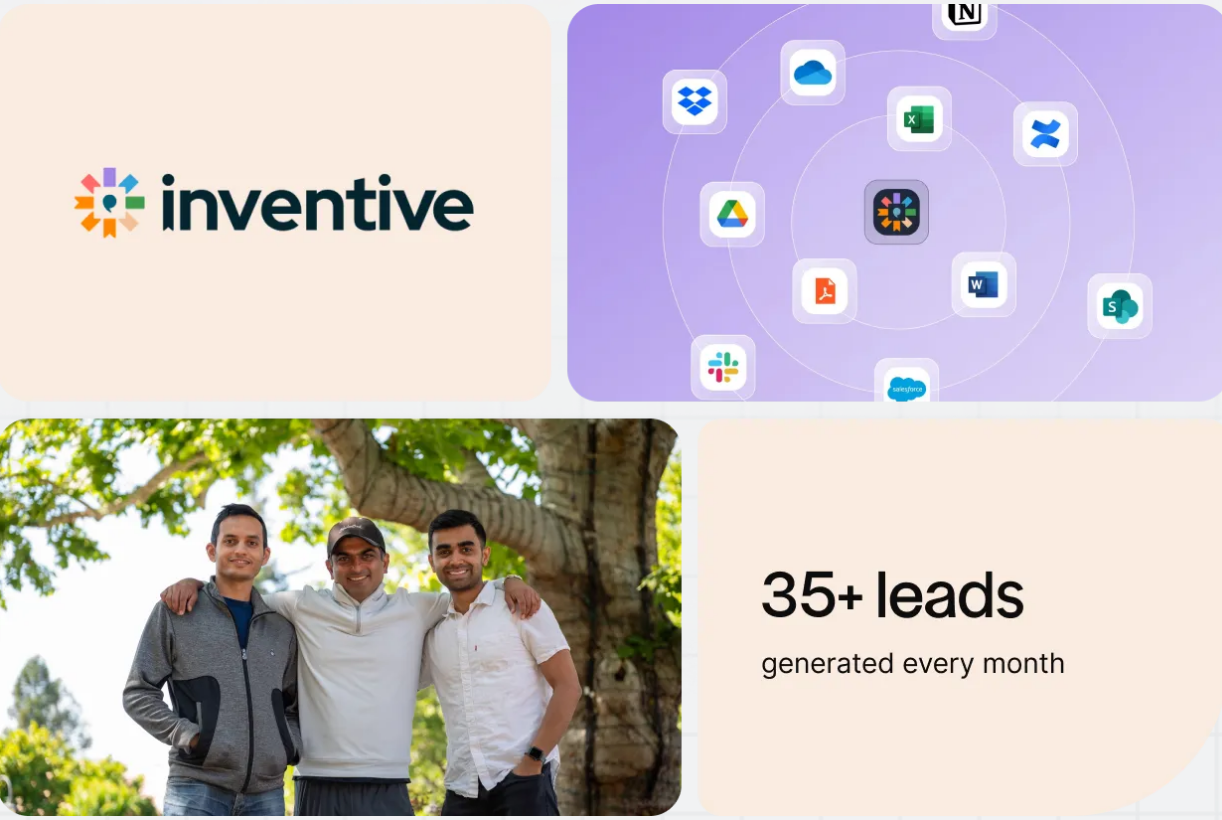
- Qualified leads per month: 35+.
- Qualified form submissions (from blog content alone): 71 in two months.
- Journey: buyers found Inventive through high‑intent queries, spent time on the site, and then reached out ready to talk deployment.
This turned a website that previously generated zero meaningful inbound into a steady pipeline channel.
Traffic Growth
- Monthly visitors: from 384 to 8,550—22x growth.
- Visitor profile: procurement leaders, sales directors, and presales managers actively researching RFP automation.
Search Visibility
- Impressions: from 38,600 to 3.05 million.
- #1 rankings: 10+ for high‑intent enterprise queries tied to RFP and questionnaire workflows.
- Visibility across: traditional search and AI‑driven environments.
Replicating this visibility with paid advertising would require a large, ongoing budget, and the results would stop as soon as the spend stopped.
The Compounding Effect
Each new page strengthened the authority of the overall content library. Leads arriving this month were supported by everything published before. Unlike campaign‑driven spikes, this growth built on itself month over month
The Bigger Picture: What Changed
Before
- Referral‑dependent growth.
- 384 monthly visitors.
- 38,600 monthly impressions.
- No inbound pipeline.
- Website existed but didn’t answer buyer questions.
After
- 35+ qualified leads per month (sustained).
- 8,550 monthly visitors (22x growth).
- 3.05 million monthly impressions.
- 10+ #1 rankings for high‑intent RFP queries.
- Website now a consistent lead source, running in parallel with the referral network.
For a company that once relied entirely on referrals, this is a structural shift in how Inventive grows.
Key Takeaways for GEO‑Focused Growth in Enterprise B2B SaaS
Why This Approach Worked
- Deep business context first: content aligned with how real buyers think and search—not vague marketing jargon.
- 350 pages across the full journey: early‑stage definitions, mid‑stage comparisons, late‑stage operational guidance.
- Topical authority building: coverage of the full RFP and presales automation landscape.
- Continuous refinement: content evolving with search behavior and market language.
- Lead filtering: only genuine buyer intent reached the sales team.
- Compounding infrastructure: each new page boosts the entire library.
This mirrors how strong AEO/GEO platforms build long‑term visibility, not just short‑term spikes.
What Changed
- Volume: 22x traffic growth and 3.05M impressions.
- Lead quality: 35+ qualified leads/month, not hope‑based outreach.
- Positioning: 10+ #1 rankings for decision‑stage queries.
- Operations: a 24/7, compounding organic channel that runs without campaigns.
- Growth model: still anchored in referrals, but reinforced by a scalable, AI‑aware discovery engine.
Summary
Inventive.ai transformed from a referral‑dependent enterprise SaaS platform with 384 monthly visitors and no inbound pipeline to a business generating 35+ qualified leads per month, with 8,550 monthly visitors (22x growth) and 3.05 million impressions. By building 350 pages aligned with how buyers research at every stage of the journey, earning 10+ #1 rankings for high‑intent queries, and deploying a continuously optimizing system, Inventive now appears when procurement leaders, sales directors, and presales managers search for RFP automation solutions. The result is a structural shift: from relying entirely on referrals to a website that generates consistent, qualified inbound demand that compounds over time.