

The Problem: A World‑Class Event Platform Hidden in Plain Sight
Fielddrive built a platform that every event organizer dreams of having:
- Facial recognition check‑in: check in thousands of attendees at major conferences with zero friction.
- Touchless verification: no delays, no manual badge scanning.
- Real‑time dashboards: show event directors exactly who is arriving, which sessions are filling, and how foot traffic is flowing.
- Badge printing: integrated, seamless, and scalable.
The company expanded from a single office in Belgium into Canada, the United States, Dubai, England, and Singapore—serving teams across 50+ countries.
Word‑of‑mouth referrals could only take them so far. The product was never the problem; awareness was. Most potential buyers didn’t even realize this level of event technology existed. They were actively searching for ways to:
- Reduce entry delays.
- Improve event reporting.
- Modernize event operations.
But they weren’t typing “facial recognition check‑in platform” into Google or AI search engines.
The opportunity was clear: meet buyers inside the problems they already researched and position Fielddrive as the solution they hadn’t yet discovered—without relying solely on referrals.
The Solution: Building Visibility Across an Undiscovered Category
The Core Challenge (Category Creation)
Fielddrive’s challenge was not just demand capture—it was category creation and buyer education. Targeting only bottom‑funnel keywords like “facial recognition check‑in” would miss the majority of buyers. The real growth opportunity was earlier in the journey, during the broader research event directors were already doing.
As Vignesh Ramalingam, Marketing Leader at Fielddrive, put it:
“The real impact is in who we’re connecting with—large‑scale event organizers are discovering our platform. They’re seeing our full range of features, from facial recognition to real‑time analytics, and it’s leading to meaningful partnerships across the globe.”
Phase 1: Knowledge Architecture (Brand Memory
We absorbed the full complexity of Fielddrive’s business:
- Core capabilities: facial recognition, touchless credentialing, real‑time dashboards, multi‑event analytics.
- Scale requirements: conferences with 10,000+ attendees.
- Buying process: which roles initiate search, what questions they ask at each stage, and where they’re most receptive to new solutions.
This mirrors how strong GEO‑focused content strategies work: map the category first, then map the content.
Phase 2: Buyer Journey Mapping
We mapped how the buying process worked:
- Which roles initiated the search (event directors, operations managers, corporate event planners).
- What questions they asked at each stage.
- Where in their research they were most receptive to discovering a new type of event tech solution.
That insight let us position Fielddrive at the right moment in the journey, not just at the end.
Phase 3: Content Build‑Out (Page Creation Engine)
We mapped 200+ queries across the entire buyer journey—not just bottom‑funnel searches, but the broader questions event operations teams were already asking.
| Buyer Stage | Search Intent Example | How Fielddrive Shows Up |
|---|---|---|
| Awareness | “Award ceremony ideas” | Fielddrive appears during initial research. |
| Evaluation | “Event reporting examples” | Operations managers encounter Fielddrive while evaluating improvements. |
| Decision | “Check‑in solutions” | Fielddrive is positioned as a clear next step. |
Each intent got a page designed to:
- Answer that specific question.
- Introduce Fielddrive as the solution.
- Be structured for both Google and AI search engines like ChatGPT and Perplexity.
This approach follows the same pattern as strong GEO‑strategies that align content with real buyer journeys.
Phase 4: AI Search Optimization
Pages were structured so that when:
- A procurement team asked ChatGPT, “What are the best event check‑in platforms?”
- Or someone asked Perplexity, “How does facial recognition work for event registration?”
Fielddrive appeared in the answer.
Being cited in those responses relied on clear, question‑based content, not generic product descriptions.
Phase 5: Continuous Optimization (Content Management Suite)
As results became clearer, the system:
- Refined pages that were climbing in search to perform even better.
- Rebuilt underperforming content based on what buyers actually engaged with.
- Compounded visibility month over month.
That continuous optimization is what lets emerging‑category businesses gradually own the conversation.
Phase 6: Lead Management (Leads Dashboard)
As inquiries arrived, the dashboard categorized them by:
- Event organizers with scheduled programs.
- Operations teams planning deployment timelines.
- Enterprises evaluating multi‑year partnerships.
The sales team could see which pages leads had read, what capabilities they researched, and what stage they were in—meaning they were not cold‑calling, but continuing conversations buyers had already started.
The Results: From Discovery to 77 Qualified Opportunities
Early Inquiries Pattern
- Operations managers with manual check‑in processes found Fielddrive while researching crowd management and realized there was a better way.
- Conference directors evaluating access control discovered facial recognition check‑in as an option they hadn’t known existed.
- Enterprise event teams found long‑form blogs and reached out with detailed questions about scalability and global deployment
Month 6 Pipeline
- Qualified opportunities per month: 10–15.
- Buyer profile: event organizers with scheduled programs and real budgets, operations teams planning technology investments, and enterprises evaluating long‑term partnerships.
6‑Month Performance
- Total inbound inquiries: 121.
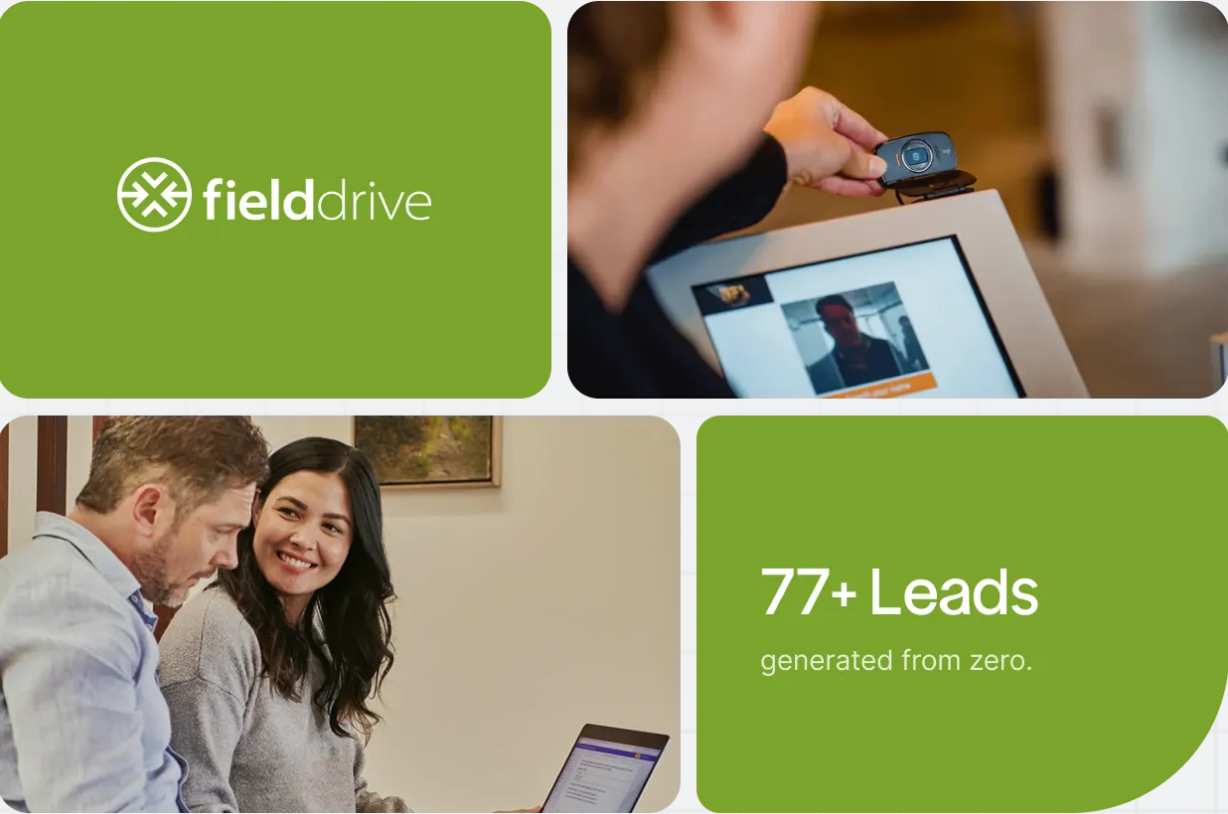
- Qualified opportunities: 77+.
- Qualification criteria: real timelines, real budgets, and real decision‑making authority
The Education Engine
Fielddrive’s growth was driven by education:
- Event professionals who had never considered facial recognition check‑in first encountered it while researching broader operational challenges.
- As they learned what was possible, they began to see how it fit into their own events.
- When they were ready to explore solutions, Fielddrive was already part of the conversation.
The result is a steady, compounding inbound pipeline driven by buyers who now understand the technology and actively seek it out.
The Bigger Picture: What Changed
Before
- Word‑of‑mouth referrals hit a ceiling.
- The product was world‑class, but awareness was the bottleneck.
- Buyers didn’t know this level of technology existed.
- Fielddrive was invisible during the early research phase.
After
- 77+ qualified opportunities in 6 months.
- 10–15 qualified leads per month (sustained).
- 121 total inbound inquiries.
- Buyers educated through content, arriving ready to talk deployment.
- The sales team continuing conversations buyers had already started.
Fielddrive didn’t just capture existing demand—they created it by:
- Meeting buyers inside the problems they already researched.
- Educating them about what was possible.
- Positioning themselves as the solution once buyers understood the technology.
That’s the essence of category creation.

Key Takeaways for GEO‑Focused Growth in Emerging Categori
Why This Approach Worked
- Category creation approach: targeting awareness‑stage queries, not just bottom‑funnel keywords, let Fielddrive sit where buyers already were.
- 200+ queries across the full buyer journey: captured buyers at awareness, evaluation, and decision stages.
- Education‑first content: introduced buyers to technology they didn’t know existed.
- AI search optimization: pages were structured so Fielddrive appeared when buyers asked ChatGPT or Perplexity about event check‑in and event operations.
- Lead context surfaced: the sales team saw which pages prospects read, letting them continue already‑started conversations.
- Compounding visibility: each month built on the last.
GEO Best Practices Illustrated
- For emerging categories: target the problems buyers are already researching (crowd management, entry delays, event reporting), not just the product terms they don’t yet know.
- For AI search: being cited in answers requires content built around the broader questions buyers ask before they even know the category exists.
- For education‑heavy sales: content that educates first, sells second creates higher‑quality leads who arrive ready to talk deployment.
- For global reach: content must serve multiple markets and use cases across different event types and regions.
The Category Creation Playbook
When buyers don’t know your category exists:
- Meet them in the problems they already research.
- Educate them about what’s possible.
- Introduce your solution as the answer once they understand the capability exists.
- Capture demand as they actively seek out the technology they’ve now discovered.
Summary
Fielddrive transformed from a world‑class event platform hidden by low awareness into a business generating 77+ qualified opportunities in six months, with 10–15 qualified leads per month sustained. By targeting 200+ queries across the full buyer journey (not just narrow product keywords), educating event professionals about technology they didn’t know existed, and optimizing for both Google and AI search, Fielddrive now appears when event organizers research broader operational challenges and is positioned as the solution once they understand what’s possible. The result is a steady, compounding inbound pipeline driven by buyers who now actively seek out the technology Fielddrive pioneered.